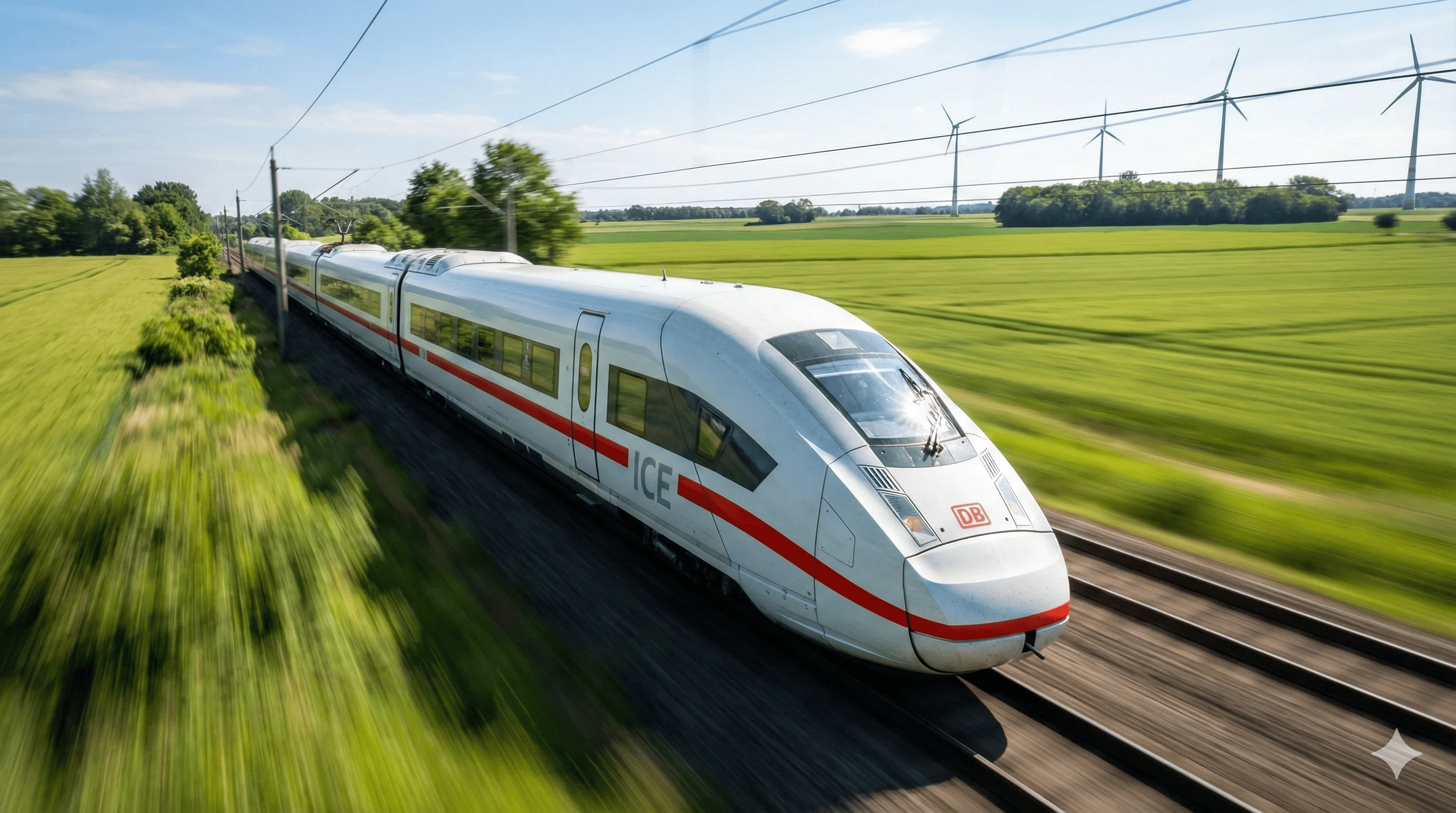
Alstom reports a record run: A near-production Coradia iLint hydrogen train covered 1,175 kilometers without refueling – a signal that emission-free operation on non-electrified lines is also possible with high daily mileage.
Quick overview
This news is primarily relevant for rail travelers because it may have concrete effects on planning, connections, or infrastructure. The focus is on hydrogen train, Alstom, and innovation. The key points are summarized concisely below.
Key points
- 1,175 km range without stopping to refill hydrogen.
- Emission-free run; the drive system produces only water vapor/condensate.
- Signal effect for long, non-electrified regional and branch lines.
What this means for travelers
The news is primarily strategically important: New vehicle technology can, in the medium term, enable more comfort, lower energy consumption, and better services on non-electrified or heavily used lines.
Context
Range is a key cost and operational factor for alternative drive systems. The record underscores that hydrogen trains are relevant not only for short networks – however, infrastructure (H2 supply) and economic viability remain the decisive scaling questions.
What to watch now
- Check concrete timetable or construction information only once travel dates are set.
- For international trips, allow more generous connection times.
- Monitor the source and operator information in case dates are still provisional.