TL;DR: This Trainvave Guide is a comprehensive tutorial on Station Signs & Platform Numbers. Read European departure boards and find your Gleis, Binario or Via. Decode platform signs, train categories and delay codes.
Platform survival: Station navigation, boarding, and rules.
A condensed visual summary of the most important takeaways from our Station Signs & Platform Numbers guide.
No gates: German stations have no ticket barriers. Validating before boarding is key.
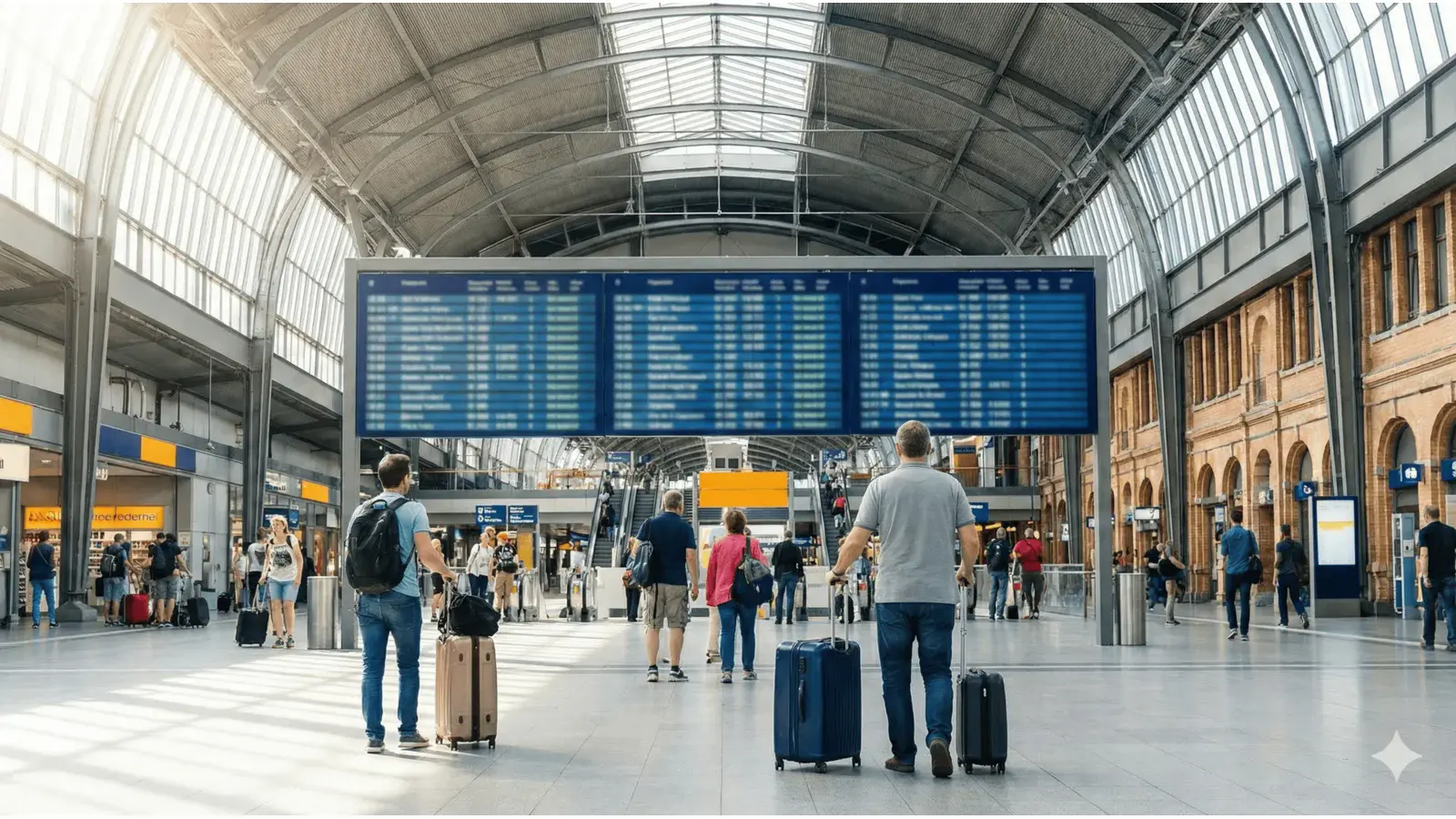
Arriving travellers are often thrown by the departure board. The city names look familiar, but the rest is a wall of foreign words and numbers. Here is how to read it.
The Key Word: Platform
Every country uses a different word for platform:
- Germany / Austria: Gleis (Gleise)
- Italy: Binario (Binari)
- France: Quai
- Spain: Vía
- Netherlands: Spoor
On the board it is the column that shows a number like 7 or 12b. That is where you wait and board.
Reading the Board
| Column | What it tells you |
|---|---|
| Time | Scheduled departure |
| Destination | Final stop — match this, not intermediate cities |
| Train no. | ICE 795, RE 1234, etc. — matches your ticket |
| Gleis / Binario | Your platform number |
| Delay | ”5 min” or a red “+10” means late |
The Mistake Tourists Make
Do not pick your train by the destination city name alone. Three trains may list “München” but go via different routes or stop at different platforms. Always confirm the train number and platform from your ticket. Pair this with ticket validation so a valid ticket gets you on the right train.
Signs on the Platform
- Green arrow / “Einsteigen”: boarding here.
- Red “Ausstieg” / “Do not board”: wrong end or no entry.
- Section letters (A, B, C): match them to your reservation so you stand near the right carriage.
Back to the Arrival Plan
Finding your platform fast is step three of the first 24 hours by train. Next, know your luggage rules before you board. Station layouts and live board explanations are published by the operators, e.g. Deutsche Bahn: bahn.de — stations & services.
Trademark Notice: Trainvave is an independent information portal and is not affiliated with, endorsed by, or connected to Deutsche Bahn AG, ÖBB, or any other railway company. All brand names, product names, and logos mentioned (including but not limited to ICE, IC, EC, DB, Deutsche Bahn) are trademarks of their respective owners and are used here solely for informational purposes.