TL;DR: This Trainvave Guide is a comprehensive tutorial on ICE vs IC vs RE vs S-Bahn: German Train Types Explained. ICE, IC, RE, S-Bahn explained: speed, comfort, costs compared. Which German train type for your journey? Never board the wrong train again!
Key decisions and step-by-step logic for ICE vs IC vs RE vs S-Bahn: German Train Types Explained.
A condensed visual summary of the most important takeaways from our ICE vs IC vs RE vs S-Bahn: German Train Types Explained guide.
Practical rules and checklists to help you navigate ICE vs IC vs RE vs S-Bahn: German Train Types Explained without confusion.
German train stations can feel like an alphabet soup: ICE, IC, RE, RB, S-Bahn, U-Bahn. What do they all mean? And which one should you take? Understanding train types will help you choose the right ticket and plan your journey. Book easily using the DB Navigator app.
Long-Distance Trains (Between Cities)
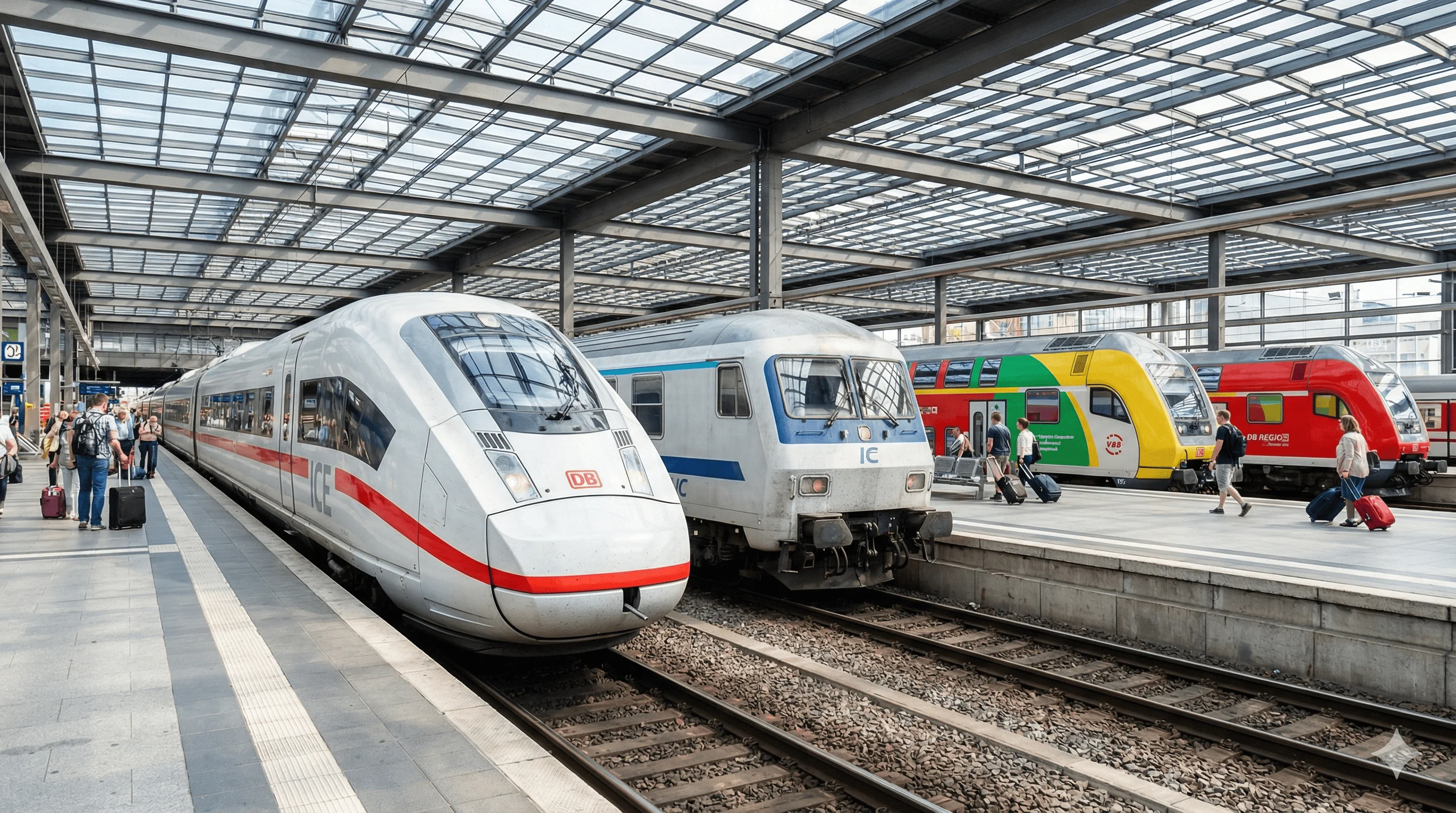
ICE (InterCity Express)
High-speed trains connecting major cities. Fastest option, usually most expensive.
- • Speed: Up to 300 km/h
- • Comfort: Best seats, WiFi, restaurant car
- • Routes: Berlin → Munich, Frankfurt → Cologne, etc.
- • Tickets: Usually need advance booking
IC / EC (InterCity / EuroCity)
Long-distance trains, slower than ICE but often cheaper. Good for longer journeys.
- • Speed: Up to 200 km/h
- • Comfort: Good seats, WiFi usually available
- • Routes: Similar to ICE, but more stops
- • Tickets: Can be cheaper than ICE
Regional Trains (Within Regions)
RE (Regional-Express)
Faster regional trains connecting cities within a region. Fewer stops than RB.
- • Speed: Up to 160 km/h
- • Stops: Main stations only
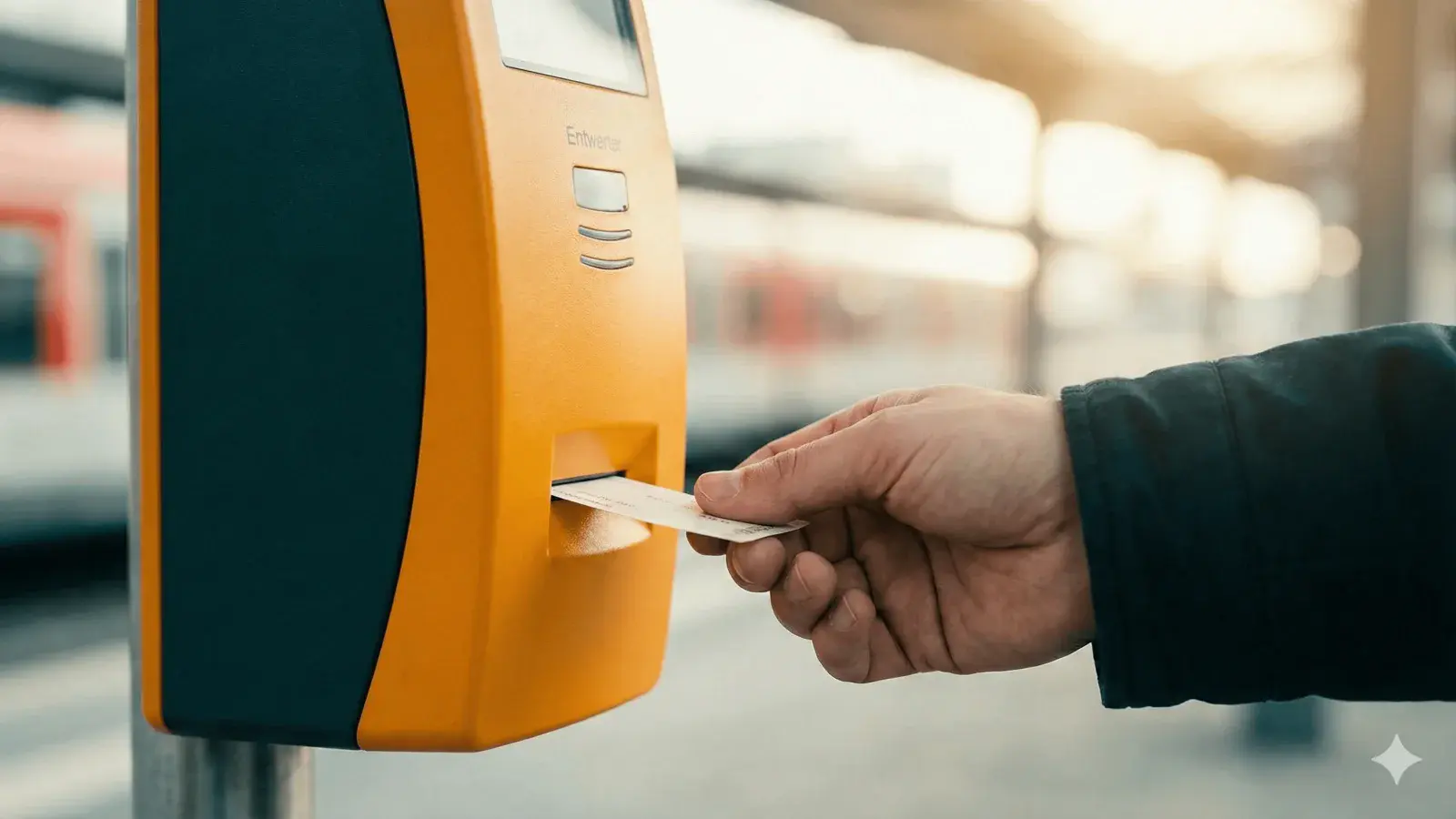
- • Tickets: Usually need validation (Entwerter)
- • Coverage: Often covered by Deutschland-Ticket
RB (Regionalbahn)
Local regional trains stopping at more stations. Slower but reaches smaller towns.
- • Speed: Up to 120 km/h
- • Stops: Many stations
- • Tickets: Usually need validation (Entwerter)
- • Coverage: Covered by Deutschland-Ticket
City Transport
S-Bahn (Stadtschnellbahn)
Commuter trains connecting city center to suburbs and nearby towns.
- • Similar to: Commuter rail / suburban trains
- • Coverage: City and surrounding area
- • Tickets: Usually need validation
- • Frequency: Very frequent (every few minutes)
U-Bahn (Untergrundbahn)
Subway / Metro — underground trains within cities.
- • Similar to: Metro / subway
- • Coverage: Within city limits
- • Tickets: Usually need validation
- • Frequency: Very frequent
Quick Decision Guide
Which train should I take?
- • Long distance (200+ km): ICE or IC/EC
- • Regional (50-200 km): RE or RB
- • City/suburbs: S-Bahn or U-Bahn
Ticket Validation: Which Trains Need It?
Usually need validation: RE, RB, S-Bahn, U-Bahn, buses, trams
Usually DON’T need validation: ICE, IC/EC (if bought online)
See our guide: How to validate a ticket
Book the Right Train in English
Omio makes it easy: compare all train types, see prices, and book in English without confusion.
Trademark Notice: Trainvave is an independent information portal and is not affiliated with, endorsed by, or connected to Deutsche Bahn AG, ÖBB, or any other railway company. All brand names, product names, and logos mentioned (including but not limited to ICE, IC, EC, DB, Deutsche Bahn) are trademarks of their respective owners and are used here solely for informational purposes.