TL;DR: This Trainvave Guide is a comprehensive tutorial on Train Photography in Germany: Tips & Best Locations | Trainvave. German train photography guide: best spots, legal rules, camera settings. Capture ICE at 300 km/h! Photography tips for rail fans.
Key decisions and step-by-step logic for Train Photography in Germany: Tips & Best Locations | Trainvave.
A condensed visual summary of the most important takeaways from our Train Photography in Germany: Tips & Best Locations | Trainvave guide.
Practical rules and checklists to help you navigate Train Photography in Germany: Tips & Best Locations | Trainvave without confusion.
Essential Equipment
Recommended Camera Gear
- Camera Body: Any DSLR or mirrorless with fast autofocus and continuous shooting mode
- Main Lens: 24-70mm f/2.8 or f/4 - versatile for most situations
- Telephoto: 70-200mm f/2.8 or f/4 - for distant trains and compression effects
- Wide Angle: 16-35mm - for station architecture and platform scenes
Camera Settings
For Moving Trains (Panning)
- Shutter Speed: 1/60 - 1/250s (depending on train speed)
- Aperture: f/8 - f/11 (good depth of field)
- ISO: Auto (100-800 range)
- Mode: Shutter Priority (Tv/S mode)
- Focus: Continuous AF (AI Servo / AF-C)
Best locations: Top spotting locations and scenic routes.
For Stationary Trains
- Shutter Speed: 1/250s or faster
- Aperture: f/5.6 - f/8 (sharp detail)
- ISO: As low as possible (100-400)
- Mode: Aperture Priority (Av/A mode)
Top Photography Locations
Leipzig Hauptbahnhof
Best For: Architecture, multiple platforms, varied train types
Access: Excellent platform access, high ceilings for interior shots
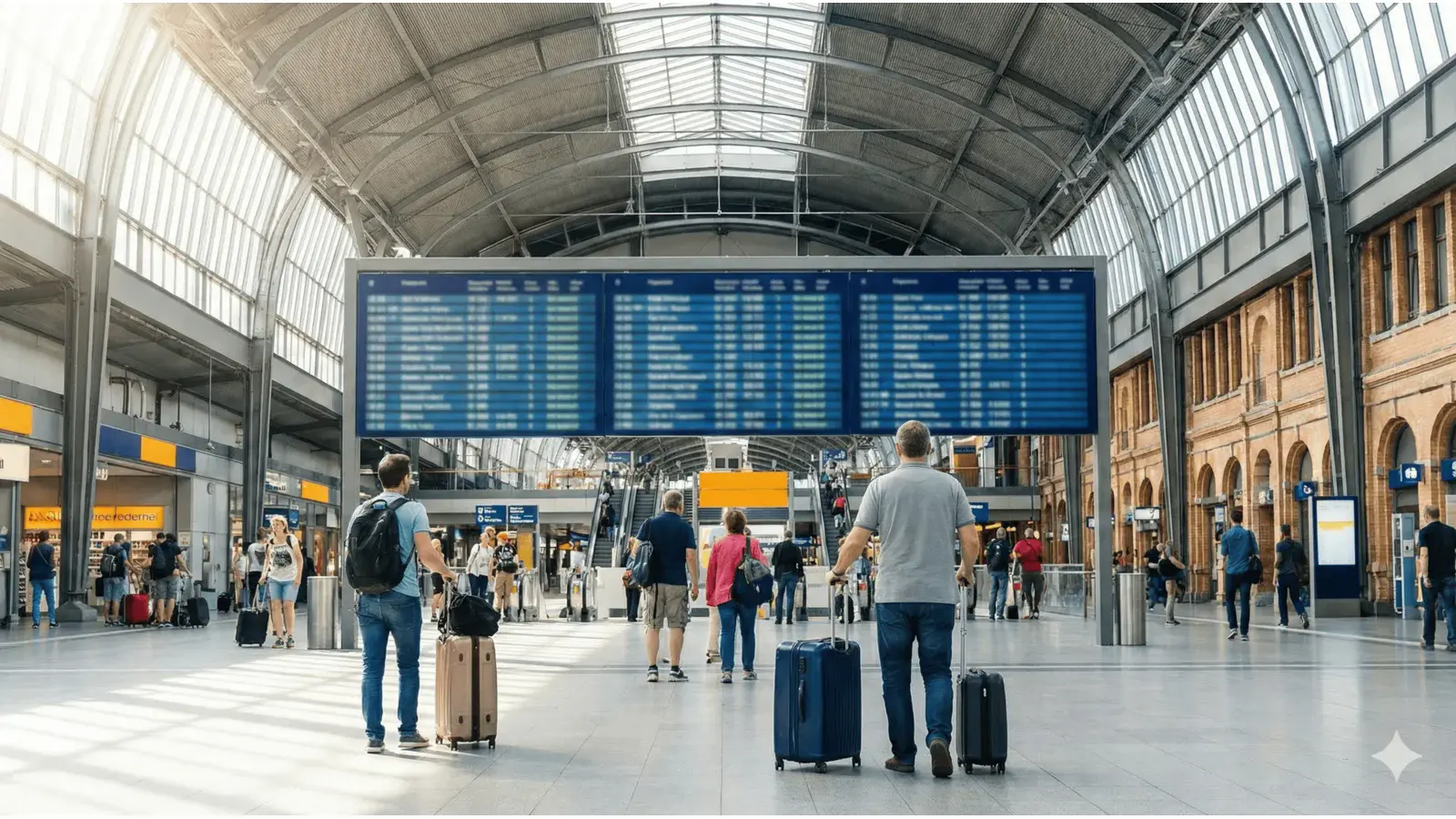
Europe’s largest terminus station offers incredible architectural photography opportunities. The grand hall provides stunning backdrops.
Frankfurt Hauptbahnhof
Best For: ICE trains, international traffic, constant action
Peak Times: 7-9 AM, 4-6 PM for maximum activity
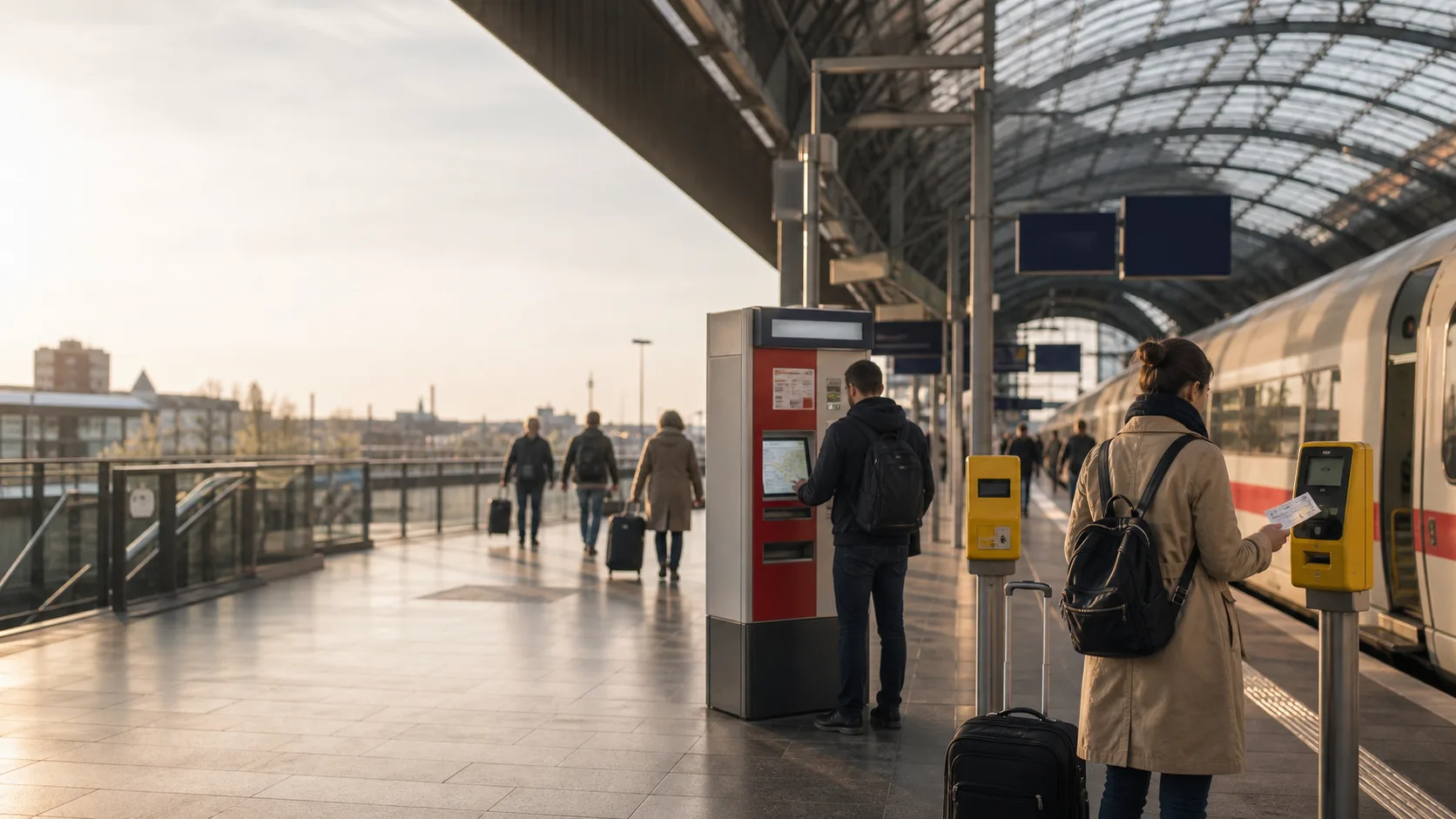
Germany’s busiest station by traffic. Platforms 4-7 offer excellent views of incoming ICE trains.
Munich Hauptbahnhof
Best For: Alpine backdrop trains, S-Bahn, ICE
Platform 11: Great southern light in afternoon
Historic station with modern glass roof. Excellent light conditions throughout the day.
Garmisch-Partenkirchen
Best For: Mountain trains, scenic backgrounds, Alpine routes
Golden Hour: Late afternoon with Zugspitze backdrop
Stunning Alpine scenery. Regional trains against mountain backdrops create postcard-perfect shots.
Photography Techniques
Panning Shots
Follow the train’s movement with your camera while shooting. Use 1/60 - 1/125s shutter speed. Creates motion blur in background while keeping train sharp.
Leading Lines
Use platform edges, tracks, or overhead wires to lead the eye to your subject. Create depth and draw attention to the approaching train.
Golden Hour Shots
Shoot 1 hour after sunrise or before sunset. Warm, soft light enhances train colors and reduces harsh shadows. Perfect for Deutsche Bahn’s red trains.
Detail Shots
Capture logos, pantographs, bogies, or control panels. These close-ups tell the technical story and add variety to your portfolio.
Photography Etiquette & Rules
✅ Do’s
- Stay behind yellow safety lines on platforms
- Be aware of other passengers and don’t block their path
- Ask permission before photographing railway staff
- Respect “No Photography” signs if posted
- Keep backpacks and gear secure and out of walkways
❌ Don’ts
- Never trespass on tracks or railway property
- Don’t use flash when trains are approaching (can distract drivers)
- Avoid photographing security installations or staff without permission
- Don’t climb on station furniture or structures
- Never prioritize a shot over safety
⚠️ Safety First: German trains are fast and quiet. Always stay alert, especially on busy platforms. ICE trains can reach 300 km/h and create significant wind pressure.
Frequently Asked Questions
Trademark Notice: Trainvave is an independent information portal and is not affiliated with, endorsed by, or connected to Deutsche Bahn AG, ÖBB, or any other railway company. All brand names, product names, and logos mentioned (including but not limited to ICE, IC, EC, DB, Deutsche Bahn) are trademarks of their respective owners and are used here solely for informational purposes.